
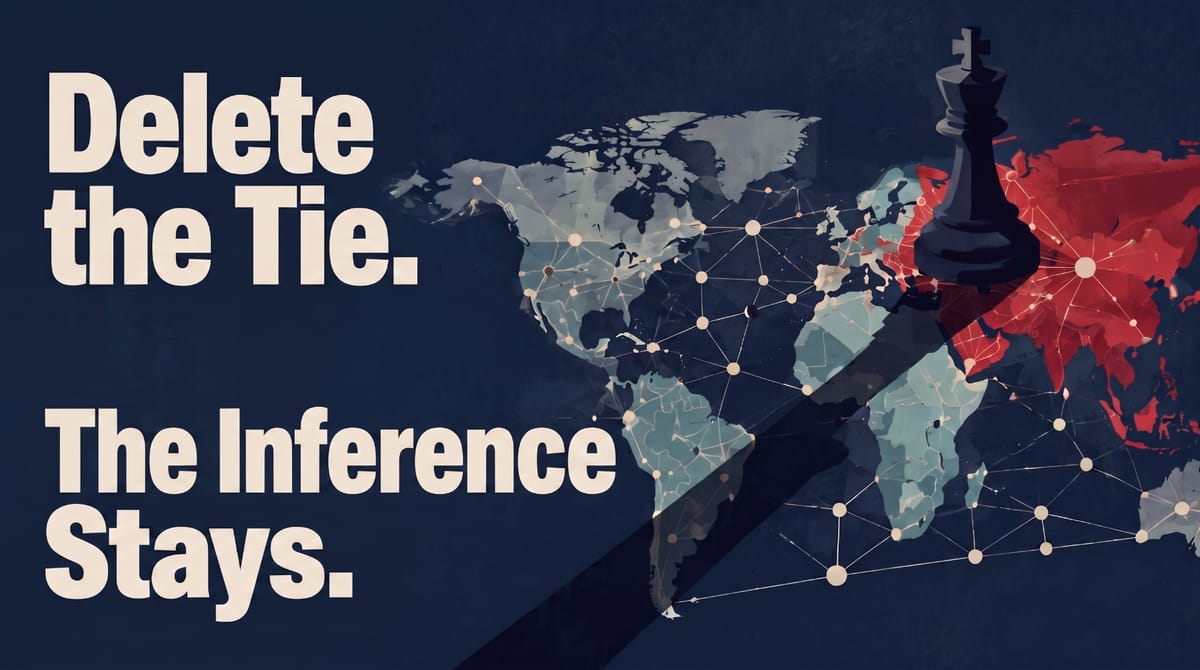
Last week I argued that your data isn't the asset; the inference is. This week, the inference you cannot delete: the one about who you are connected to.
You can withdraw consent for what you shared. You cannot withdraw it for a graph, because the graph is built from everyone else's behaviour. Your colleagues' contact lists, your partner's check-ins, the device that keeps appearing on the same Wi-Fi as yours: each is someone else's data, and together they place you. Social networking maps are instruments of asymmetric power because the map-holder can act on the network while the people in it see only the interface.
The graph is a one-way mirror
A social graph is nodes and ties. On a commercial platform the nodes are users, advertisers, publishers and businesses; the ties are messages, follows, transactions, shared devices, repeated co-presence. Nothing needs to be displayed for it to be priced. A relationship the platform never shows you can still be an attribute it sells.
The scale is not a footnote. DataReportal counts 5.79 billion social media user identities as of April 2026, up 294 million in a year. Identities, not people: the typical user is active on about 6.5 platforms a month, per the GWI data in the same report. Fragmentation is usually read as a limit on any one platform's view. It is the opposite. The more a person's network is scattered across services, the more valuable the actor that can stitch the pieces together. I made that point about interfaces in AI Is Aggregating the Aggregators; it holds for relationships too.
Who can see the graph, who can alter it, and who can sell decisions made from it?
That is the whole question, and on today's platforms the answer to all three parts is the same party. Whether you like it or not, your data will fuel AI. The graph adds a harder clause: so will everyone else's data about you.
AI turns the map into an inference engine
Classical network analysis describes ties that were observed. Machine learning treats those ties as training data: a link-prediction model estimates whether an unobserved connection is likely from shared neighbours, common communities and structural position. The question moves from who is connected to who is likely to be connected, which accounts belong to the same person, which cluster is this actor coordinating with.
Two consequences follow. First, the inference is produced from an incomplete graph by design, so removing a visible tie does not remove it. Delete the follow, drop the contact, leave the group: the model still has your position, and from the nodes that remain it can derive the deleted tie again. Second, anonymisation fails the same way. Strip the names and the profile fields and a node is still identifiable by the shape of its neighbourhood. The graph's topology is a signature.
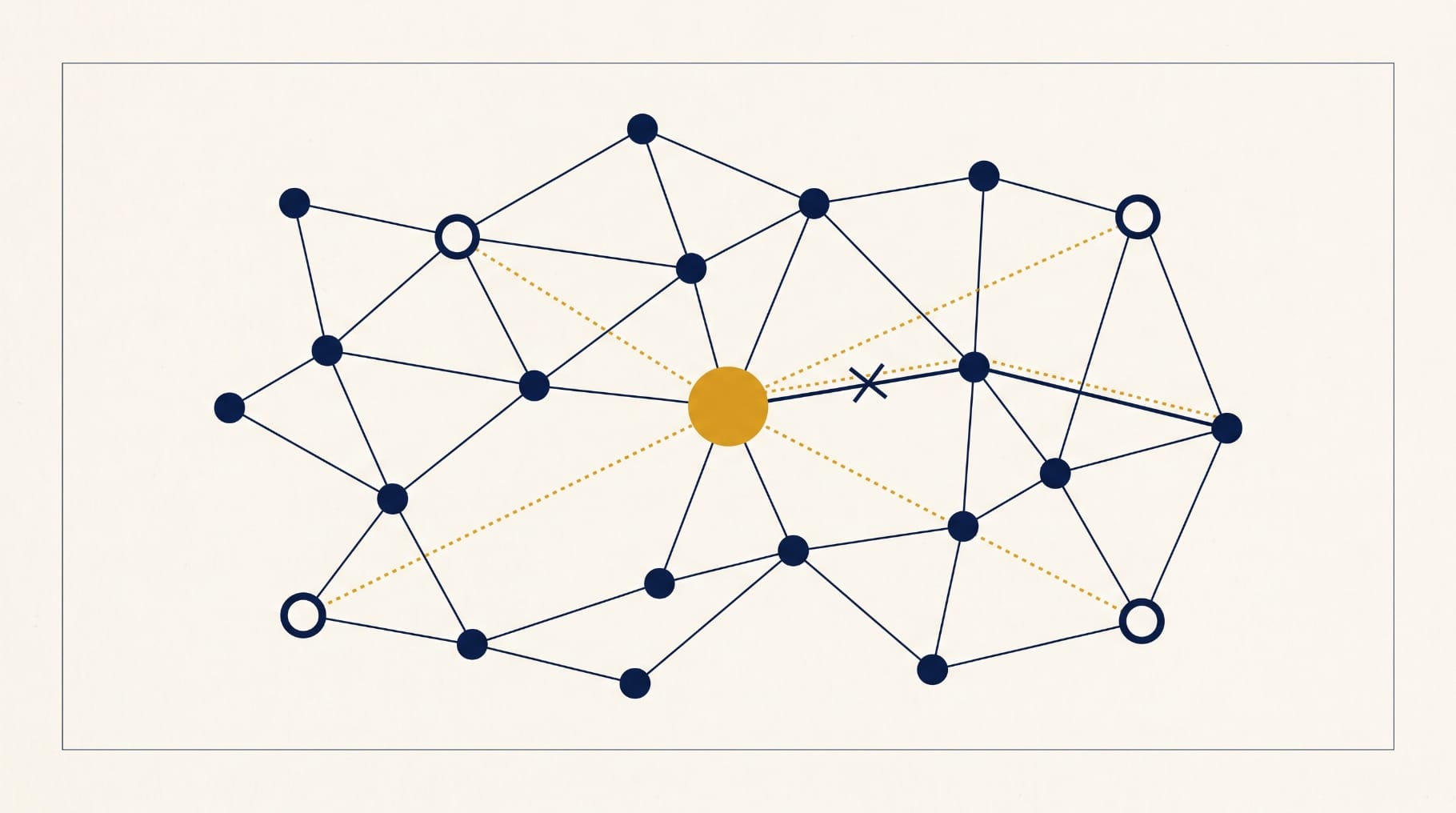
This is the distinction from ordinary collection that I think matters most. Collection asks what was recorded. The graph asks what the relationships make inferable, and the inferred tie is a second layer of data, created by the platform, that the person it describes never supplied and usually cannot see.
The law already knows what a tie reveals
European courts reached this point before the technology made it obvious.
In OT (C-184/20, 2022), the Court of Justice held that publishing the name of a public official's spouse or partner is processing of special-category data. Not because a name is sensitive, but because it can reveal sexual orientation "by means of an intellectual operation involving comparison or deduction". The court protected the tie for what it discloses. That is the graph argument, in law, four years ago.
In Meta v Bundeskartellamt (C-252/21, 2023), the Grand Chamber found that combining a user's Facebook data with data from Instagram, WhatsApp and third-party sites requires separate, freely given consent, because users cannot reasonably expect data beyond their conduct on the network to be processed by its operator. The court drew the line at aggregation: the stitching-together that makes the map.
The law has reached the tie and the aggregation. It has not reached the inference about you that is built from other people's ties.
That is the gap. GDPR gives you access to your data and a right to contest automated decisions. It does not give you a view of the graph features that produced a score, the confidence threshold behind an inferred association, or the source of a tie that was never yours to disclose. A data broker can build a relational profile of you that you cannot inspect with anything like the ease with which it was assembled. You may learn the outcome. You will rarely learn the edge.
Point the map the other way
The same method, in a buyer's hands, is how you find the gatekeeper. That is the dual use, and it is where this stops being a privacy piece and becomes a procurement one.
Take a European public buyer contracting for an AI-enabled service. Draw the contract map and the buyer sits in the centre: it awards, it can terminate. Now draw the dependency map — hosting, model access, data pipeline, identity, updates — and a different node moves to the centre: the infrastructure provider sitting between the prime contractor and the model service. If you can terminate the prime but cannot migrate the model, the data or the infrastructure without the same intermediary, formal authority and de facto control have diverged. The prime captures the visible contract; the intermediary captures the recurring dependency.
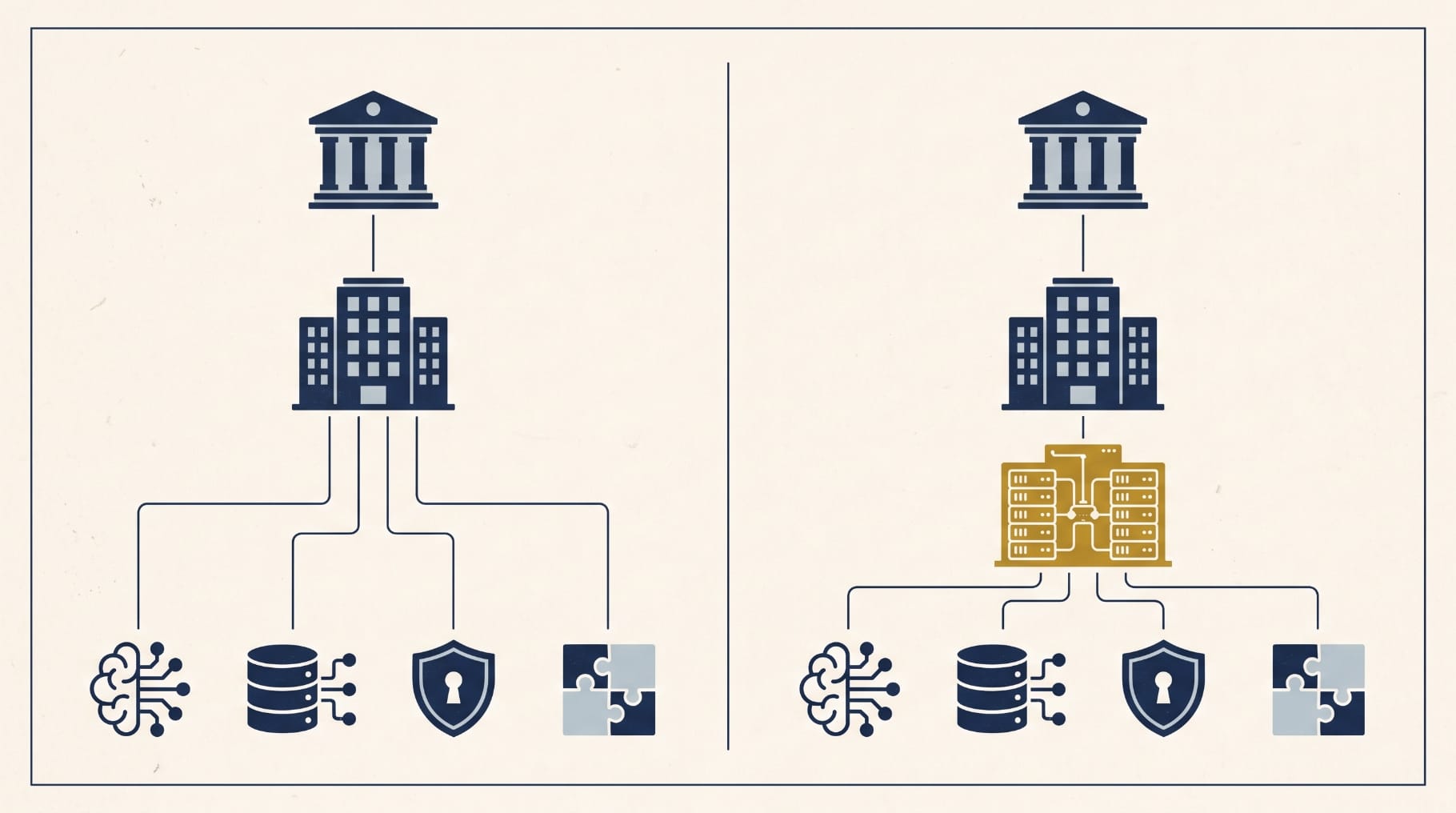
A press release shows a diversified partnership. The graph shows one intermediary connecting most of the participants. I called this an exposure, not a strategy, and the graph is how you measure it.
If removing one actor forces everyone else to renegotiate access, that actor holds more power than its revenue suggests.
Four questions before you rely on a map, or sign into one:
- Who signs? The contract map: formal authority, termination rights, the node that awards.
- Who cannot be replaced? The dependency map: hosting, model, pipeline, identity, and which single node sits on all of them.
- What does each tie mean? A contract, a data flow, a shared director, an inferred similarity. These are not interchangeable, and a centrality ranking is worthless without the definition of the tie that produced it.
- What happens when you remove a node? Recompute. If the gatekeeper disappears under a small change to the inclusion rule, it was an artefact. If everyone has to renegotiate, it was real.
The asymmetry was never that graphs exist. It is who gets to hold one. Platforms, brokers and states hold population-scale maps of the people inside them; the people hold an interface. Buyers could hold a map of their vendors, and mostly don't. Who captures the surplus in AI markets is decided on the path between participants, not at the product. The path is a graph.
You can delete what you shared. You cannot delete what you are connected to.
Sources
- CJEU, C-184/20, OT v Vyriausioji tarnybinės etikos komisija (1 August 2022)
- CJEU, C-252/21, Meta Platforms and Others v Bundeskartellamt (4 July 2023)
- DataReportal, Global social media users (April 2026)
Fabio Lauria CEO & Founder, ELECTE
Every week, we explore AI without the hype — using data, analysis and an independent perspective.
AI Frontiers · every Thursday
Subscribe to AI Frontiers.
Subscribe to keep reading.
The first essay was on us. The rest of this one is for subscribers. Read every essay and receive new editions by email. No payment required.
Comments ()