

DeepSeek, Manus, and the Monopoly That's Cracking
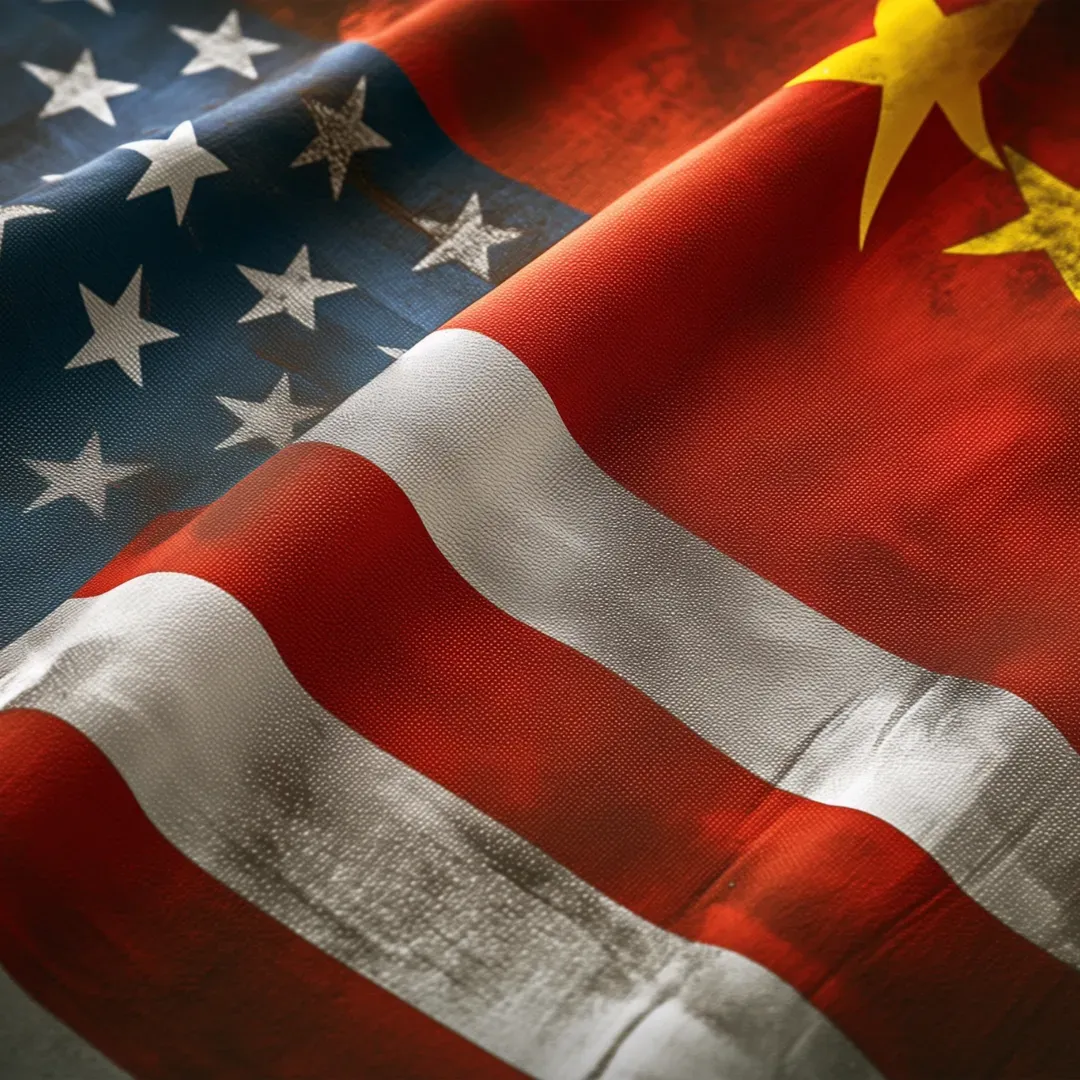
In early 2025, two Chinese startups — DeepSeek and Manus — were pitched as the challenge to Western dominance in artificial intelligence. More than a technological turning point, though, it was largely a marketing operation — and the two stories ended in opposite ways. In late 2025 Meta bought Manus for a reported sum north of two billion dollars, and the startup severed its ties to China to clear regulatory hurdles. DeepSeek, by contrast, was never sold: it remains independent, owned by its founder Liang Wenfeng's quantitative hedge fund, High-Flyer.
Strip away the marketing, and the story that matters isn't who "won" — it's that the Western monopoly on AI has stopped being a monopoly. The question "can China compete?" has aged badly: it already competes, at lower cost, with open models, and with an industrial strategy openly aimed at self-sufficiency. The West still holds real chokepoints — chiefly frontier chips and export controls — but it uses them to defend a narrowing lead, not to govern an order it controls outright.
And there's a layer beneath the geopolitics. Everyone in this race builds on the same human knowledge, extracted without compensation — and the accusation of "theft" only ever flies in one direction. That's where to start.
What we're actually talking about: DeepSeek and Manus
First the facts — which the commentary, oddly, tends to bury at the bottom.
DeepSeek. Founded in 2023 by Liang Wenfeng, spun out of a quantitative hedge fund, with a lean team and one obsession: frontier performance through optimization rather than simply building bigger models. The base model, DeepSeek-V3, is a Mixture-of-Experts architecture with 671 billion parameters (37 billion active per token). According to the company, its final pre-training run cost around $5.6 million on H800 GPUs, against the $50–100 million estimated for GPT-4.
This figure needs precision, because it's the most-cited and most-misunderstood number of 2025. It refers to V3, not the reasoning model R1 — which is built on top of V3 and whose cost was never disclosed. And it covers only the final training run, not research, infrastructure, and hardware, which analysts estimate at orders of magnitude more. R1, once in service, costs about 27 times less than OpenAI's o1. When it launched, in January 2025, Nvidia's stock fell roughly 17%, erasing nearly $600 billion in market value in a single session: the largest one-day loss in the history of the U.S. market.
Manus. Launched in March 2025 by the startup Monica (Butterfly Effect), Manus doesn't train a model of its own: it orchestrates existing models — Anthropic's Claude and Alibaba's Qwen — behind a single interface. A wrapper, done well. The hype was immediate: 138,000 Discord members within weeks, invite codes resold at absurd prices, a "Taylor Swift concert" comparison picked up by TechCrunch. Then the epilogue we've already given away: inside Meta.
Two different roads, then. DeepSeek works vertically, on the efficiency of the base model; Manus horizontally, on automating tasks using other people's models. But it's worth seeing them together, because they tell the same mechanism from two angles.
How DeepSeek pulled it off: distillation
The key to DeepSeek's efficiency is distillation, built on the teacher-student paradigm. A large model — the teacher — trained on enormous amounts of data, produces answers that a smaller model — the student — learns to imitate. The student doesn't study the original data: it studies the teacher's already-digested "lessons." It's efficient, and it's also where the whole controversy hangs: what if the teacher is someone else's proprietary model?
OpenAI suspected DeepSeek had distilled from GPT's outputs — an accusation hard to prove now that the web is saturated with ChatGPT-generated text. Two real limits remain at the conceptual level: the student inherits the teacher's biases without being able to challenge them, and by definition can't surpass it in originality, only imitate it better. An AI born derivative.
Hypocrisy, extraction, and chokepoints
Here's the strongest argument, and it belongs at the center. Calling distillation "theft" is selective, because the "original" Western models are also built on knowledge they didn't create: books, scientific papers, open-source code, the content of billions of people, largely used without compensation or consent. Whoever denounces someone else's appropriation rests on an appropriation of their own. DeepSeek is no more a pirate than its accusers: it's one more layer of extraction from a commons nobody paid for.
The asymmetry, then, isn't about who "steals" and who doesn't — it's about the power to write the rules and tell the story, and that power the West still wields. The American controls on advanced-chip exports are a modern trade blockade. The reflex of calling Chinese technology a "copy" and one's own an "innovation" persists even when both rest on the same research. And the dominant narrative paints Chinese AI as inherently dangerous, implying that only the West produces "ethical" technology. Call it digital colonialism if you like.
But it's a colonialism that works less and less. Chips remain the real chokepoint — and that's where Western pressure genuinely bites — except that China is building its own, moving state capital, and, above all, has turned openness into a weapon. A monopoly can be defended with bans; it can't be rebuilt with them.
And the contrast between the "free West" and "authoritarian China" is itself part of that narrative. Yes, every model embeds values and guardrails, and Western companies unilaterally decide which. But the more uncomfortable point is that the West exercises censorship too — only through more discreet channels: regulatory and bureaucratic pressure, the chokepoints of payment processors, app stores and cloud providers, informal pressure on platforms, liability regimes that push companies to restrict pre-emptively. "Just choose a competitor" is a weak escape when every competitor operates under the same pressures. The honest distinction isn't free versus censored: it's that China's version is overt and centralized, while the West's is diffuse, bureaucratic, and dressed as neutrality — which only makes it easier to deny. Different mechanism, not a clean conscience.
The democratization that's real
There is a concrete form of democratization in this story, and it's both the strongest point in favor of the Chinese approach and the way the monopoly actually cracks. DeepSeek's models are open-weight, released under permissive licenses: you can download, inspect, adapt, and run them on your own hardware, without asking a gatekeeper's permission and without paying a per-token toll. This isn't a side effect of low cost, it's a strategy: while the Western leaders keep their best models closed and metered, China has turned openness into a weapon. Spreading capability is the fastest way to erode the advantage of those who sell it — and the most democratizing move of the year came from the side the West paints as the threat.
The hardware limit, too, matters less than it seems. The distilled versions already run on a well-specced machine, and model compression — what small, open models like the Gemma family achieve on minimal resources — is lowering the barrier fast. That's a separate piece, but it points the same way: capability spreads.
An asymmetry remains, but a narrower one than the West tells it, and by no means one-directional. Democratizing the model isn't democratizing the power: frontier chips and concentrated capital are still real levers. But the contrast between the two protagonists tells you which way the wind blows. The more significant player, DeepSeek, stayed Chinese, independent, and open; the lesser one, the Manus wrapper, ended up inside Meta. Diffusion is the big story; absorption, the footnote.
What's left
For a few months DeepSeek and Manus looked like a threat to Western dominance in AI. They turned out to be something more interesting: proof that the dominance is no longer a monopoly. The surprise — the East closing the capability gap at a fraction of the cost, certified by Nvidia's one-session crash — isn't an accident, it's a direction. The West keeps a real advantage, concentrated in frontier chips and capital, and defends it with bans and with the rhetoric of "ethical" AI. But defending isn't dominating, and a monopoly held up by export controls is already a monopoly closing behind itself.
Beneath the geopolitics sits the question neither side has any interest in asking: whether anything in this race ever returns to the people who produced the knowledge it runs on. Everyone, Chinese and Western, builds on the same uncompensated human work. On that, at least, the game is rigged against all of them the same way.
Sources:
- DeepSeek-V3 and DeepSeek-R1: company technical reports; analysis of real training costs (Lawfare, SemiAnalysis, The Register).
- Nvidia's 27 January 2025 crash (~17%, ~$600 billion): CNBC, NBC News.
- Manus: launched 6 March 2025 (Monica / Butterfly Effect); acquired by Meta, December 2025 (The Decoder, Bloomberg).
- DeepSeek ownership and 2026 fundraising: Wikipedia, Motley Fool, Tech Insider.
Newsletter article — updated. Originally published in our weekly newsletter and later revised with the 2025 developments: DeepSeek, the Manus saga, and its acquisition by Meta.
Last updated: June 2026
AI Frontiers · every Thursday
Subscribe to AI Frontiers.
Subscribe to keep reading.
The first essay was on us. The rest of this one is for subscribers. Read every essay and receive new editions by email. No payment required.
Comments ()